The Unheard Revolution: How Open-Ear Audio Redefines Personal Sound
Update on Oct. 14, 2025, 5:16 p.m.
The cyclist glides through the city’s hum, a gentle podcast narration in her ears, yet she distinctly hears the whir of an electric car approaching from behind. In an open-plan office, a developer listens to a focus-enhancing ambient track, but still catches his name being called from across the room. These aren’t scenes from a sci-fi future; they are everyday realities made possible by a transformative shift in audio technology: open-ear listening. For decades, personal audio has been a binary choice—immerse yourself in sound and disconnect from the world, or stay present and forgo your soundtrack. But how is it possible to hear music clearly while also hearing the world around you? The answer lies in rethinking the very path that sound takes to reach our brains.

The Two Journeys of Sound
To understand the magic of open-ear audio, we first need a quick refresher on how we hear. Traditionally, sound travels as vibrations through the air, collected by our outer ear, funneled through the ear canal to vibrate the eardrum, which in turn moves the tiny bones of the middle ear. This mechanical energy is then transferred to the fluid-filled cochlea in the inner ear, where it’s converted into electrical signals our brain interprets as sound. This entire process is a form of air conduction, and it’s the principle behind almost every headphone and speaker ever made.
However, there is another, less-traveled path. Sound can bypass the outer and middle ear entirely and reach the cochlea through direct vibration of the skull. This is bone conduction. Think of how your voice sounds different to you than to others; that’s because you hear a significant portion of it through bone conduction. Open-ear audio technology ingeniously leverages these two distinct pathways to deliver sound without plugging or covering the ear canal.
Technical Path One: The Resonance of Bone (Bone Conduction)
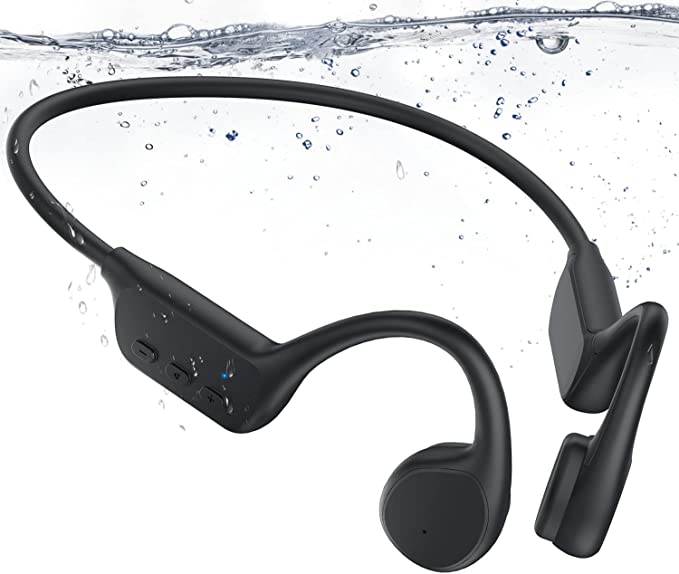
Bone conduction technology is perhaps the most well-known form of open-ear audio. Devices using this method don’t have traditional speakers. Instead, they employ transducers that rest on the cheekbones, just in front of the ears. These transducers convert electrical audio signals into micro-vibrations that travel through the zygomatic arch (cheekbone) directly to the inner ear.
The primary advantage is immediately obvious: your ear canal remains completely unobstructed. This provides total situational awareness, making it a favored choice for runners, cyclists, and outdoor enthusiasts who need to hear traffic, pedestrians, and other environmental cues for safety. According to data from the U.S. National Highway Traffic Safety Administration (NHTSA), pedestrian and cyclist safety is a major concern, with distractions playing a significant role in accidents. Technologies that allow for environmental perception while providing audio information can be a critical safety tool.
However, this unique pathway has its limitations. The fidelity of bone-conduction audio, especially in the lower and higher frequencies, can be a compromise compared to traditional headphones. Bass reproduction is often challenging, and the vibrations can cause a tickling sensation for some users at high volumes. Furthermore, as the entire skull can vibrate, sound leakage—where people nearby can hear what you’re listening to—can be more pronounced, particularly in quiet environments.
Technical Path Two: The Sculpture of Air (Air Conduction & Directional Sound)
While vibrating bone offers one ingenious detour around the ear canal, another approach asks a different question: what if we could simply ‘aim’ the air-conducted sound so precisely that it reaches our ears without needing a seal? This is the realm of open-ear air conduction, often utilizing a principle known as directional sound.
Instead of one large speaker, devices like the RERBO J6-8 audio sunglasses embed multiple, strategically placed micro-speakers in the frame’s temples. These speakers use principles of acoustics, such as constructive and destructive interference, to create a focused beam of sound directed towards the user’s ear. The goal is to generate a personal sound field, often described as a “private sound bubble.” Research in academic journals, such as the Journal of the Acoustical Society of America, explores concepts like “acoustic contrast control” which form the scientific bedrock of these systems, aiming to maximize sound pressure at the listener’s ear while minimizing it elsewhere.
This method can often deliver a more natural and full-range sound profile than bone conduction, as it uses the ear’s natural air conduction pathway. The experience is akin to having a pair of tiny, personal speakers right next to your ears. The primary challenge for this technology is managing sound leakage. While advanced acoustic designs significantly reduce how much sound escapes, it’s a game of physics; in a very quiet room, a person sitting next to you might catch faint whispers of your music. This approach, therefore, excels in moderately noisy environments where it effectively protects privacy without creating total isolation.
The Wisdom of Choice: The Scene Defines the Technology
There is no single “best” form of open-ear audio. The superior choice is dictated entirely by the user’s context and priorities. One technology’s weakness is another’s strength.
| Feature / Scenario | Bone Conduction | Directional Air Conduction | Traditional In-Ear Headphones |
|---|---|---|---|
| Situational Awareness | Excellent (Completely open ear canal) | Very Good (Physically unobstructed) | Poor (Blocks the ear canal) |
| Audio Fidelity (Bass) | Moderate (Can lack deep bass) | Good (More natural, fuller range) | Excellent (Sealed design excels at bass) |
| Comfort | Good (No ear canal pressure) | Excellent (No pressure or vibration) | Varies (Can cause ear fatigue) |
| Sound Leakage | Moderate (Vibrations can be audible) | Moderate to Low (Highly dependent on design) | Very Low (Excellent isolation) |
| Ideal Use Case | High-intensity sports, noisy industrial work | Driving, office work, casual listening, walking | Critical music listening, commuting in loud trains/planes |

Beyond Headphones: The Future of Wearable Audio
This choice is not just about personal audio anymore. The underlying technology of open-ear sound is a critical building block for the next generation of computing. As wearable technology evolves from smartwatches to augmented reality (AR) glasses, the ability to overlay digital audio onto the real world without creating sensory deprivation is paramount. Open-ear audio is the key to providing notifications, navigation cues, and virtual assistant interactions that feel seamlessly integrated into our reality, not distractingly isolated from it. The global market for “hearables” and audio glasses is projected by firms like Grand View Research to grow significantly, signaling a future where our audio devices are heard, but not necessarily seen or felt.
In conclusion, the open-ear audio revolution is about more than just a new type of headphone. It’s a fundamental shift towards a more integrated and safer relationship with our digital lives. By liberating our ears, these technologies allow us to be present in our physical environment while staying connected to our digital world, finally finding a harmonious balance between hearing the future and seeing the world.